Trump Approves US-Saudi Nuclear Deal, Raising Israel Security Concerns
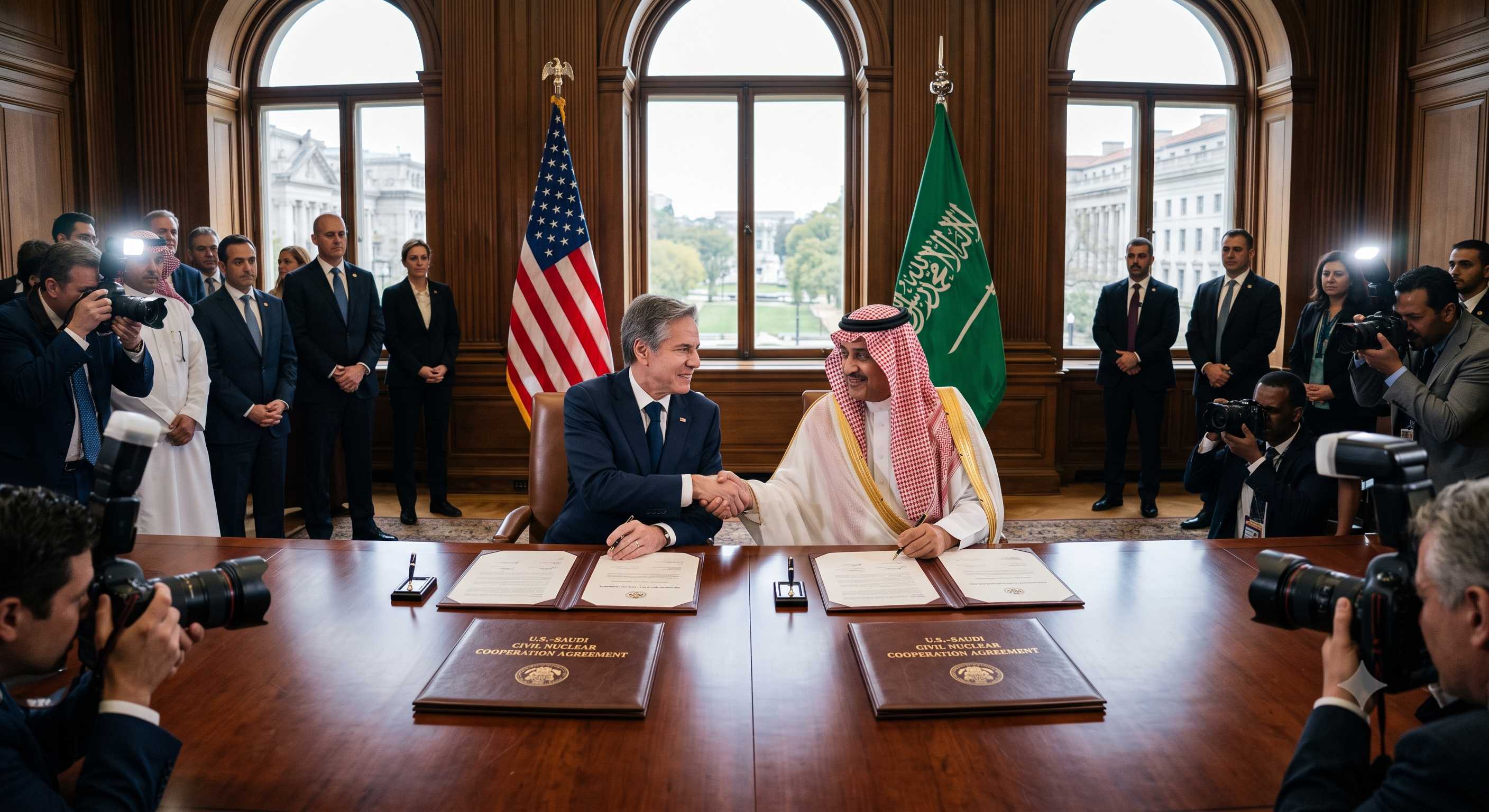
In a historic and highly controversial move, US President Donald Trump approved a landmark civilian nuclear pact with Saudi Arabia. On July 22, US Energy Secretary Chris Wright and Saudi Energy Minister Prince Abdulaziz bin Salman signed the agreement, which is worth tens of billions of dollars and builds on the understandings reached between Trump and Crown Prince Mohammed bin Salman in 2025.
On paper, the deal is for US companies such as Westinghouse. In reality, it is a geopolitical earthquake, and the strongest aftershocks are being felt in Israel.
The pact shatters Israel’s nuclear monopoly in the region. Israel is one of only nine countries believed to possess nuclear weapons and the only country in West Asia with them. Israel neither confirms nor denies its arsenal, but now its closest ally, the US, is handing Saudi Arabia the keys to the nuclear club.
The agreement was signed without Saudi Arabia recognizing Israel or normalizing ties. That means Israel loses a major bargaining chip in its bid for peace with the most powerful Arab state and leader of the Sunni Muslim world.
The deal also bypasses standard proliferation oversight and safeguards, opening a pathway to nuclear weapon development if Saudi Arabia chooses that route in the future. The US has also not required Saudi Arabia to adopt the UN nuclear watchdog’s additional protocol, which gives inspectors wider access to verify a country’s nuclear program.
The move could also trigger a regional nuclear arms race. Egypt and Turkey may now push harder to accelerate their own nuclear enrichment programs, further destabilizing the region. Israel’s qualitative military edge would fade in a region crowded with nuclear states.
The deal also signals a weakening of US support for Israel. Negotiated and signed over Israel’s head, it shows that Washington is willing to shape its regional policy around commercial interests and the goal of countering Chinese and Russian influence, even if that damages Israel’s military advantage.
There are also long-term risks inside Saudi Arabia itself. If a future anti-Israel government ever takes power in Riyadh, it would inherit a fully functional, US-built nuclear infrastructure. That possibility alarms Israel, which views the deal not as a policy disagreement, but as an existential security threat.
The political backlash in Israel has been swift, with many calling it a major strategic failure.
rutvik
rutvik is a Senior Journalist dedicated to bringing you the most accurate and up-to-date coverage. With a commitment to journalistic integrity and deep research, every piece is vetted for quality and truth.